In the world of industrial production, compressed air is a vital utility, often referred to as the “fourth utility” alongside electricity, water, and natural gas. However, raw compressed air contains significant amounts of moisture, oil, dust, and other contaminants that can damage equipment, compromise product quality, and increase operational costs. This is where a compressed air dryer comes into play—a critical piece of equipment designed to remove moisture and impurities from compressed air, ensuring it meets the strict standards required for various industrial applications. From small workshops to large manufacturing plants, a reliable compressed air dryer is essential for maintaining efficient, safe, and cost-effective operations.
To understand the importance of a compressed air dryer, it’s first necessary to recognize the problems caused by moist compressed air. When air is compressed, its temperature rises, and its ability to hold moisture decreases, leading to condensation. This condensed water can accumulate in pipelines, valves, pneumatic tools, and precision equipment, causing rust, corrosion, and blockages. In industries such as food and beverage, pharmaceutical, and electronics, even tiny traces of moisture or oil can contaminate products, leading to costly rejects and non-compliance with regulatory standards. For pneumatic tools and machinery, moisture can reduce performance, shorten service life, and increase maintenance frequency—all of which add up to higher operational costs over time. A compressed air dryer eliminates these issues by removing moisture and contaminants, delivering clean, dry air that protects equipment and ensures consistent production quality.
There are several types of compressed air dryers, each designed to meet different industrial needs, operating conditions, and moisture removal requirements. The most common types include refrigerated compressed air dryers, desiccant compressed air dryers, membrane compressed air dryers, and adsorption dryers. Each type works on a different principle and offers unique advantages for specific applications.
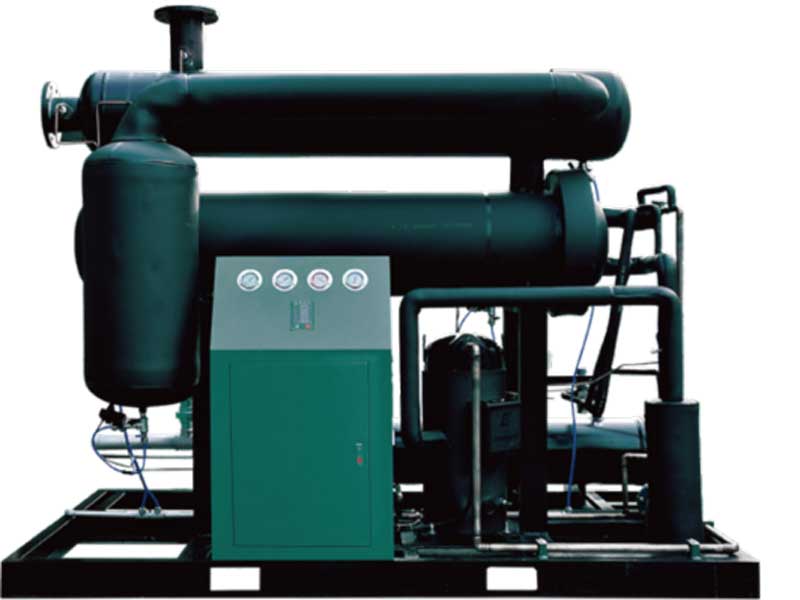
Refrigerated compressed air dryers are the most widely used type, ideal for general industrial applications where the required dew point is between 3°C and 10°C. They work by cooling the compressed air to a temperature where moisture condenses, then separating the condensed water from the air stream using a separator. Refrigerated dryers are energy-efficient, cost-effective, and easy to maintain, making them suitable for small to medium-sized factories, workshops, and applications such as pneumatic tools, packaging machinery, and automotive manufacturing.
Desiccant compressed air dryers, also known as adsorption dryers, are designed for applications that require extremely dry air with a dew point as low as -40°C or even -70°C. They use a desiccant material (such as silica gel, molecular sieve, or activated alumina) to adsorb moisture from the compressed air. Desiccant dryers are commonly used in industries where moisture sensitivity is critical, such as pharmaceutical manufacturing, electronics production, laser cutting, and aerospace. They are available in two main configurations: heatless and heated, with heated models being more energy-efficient for continuous operation.
Membrane compressed air dryers are a compact, portable option ideal for small-scale applications, mobile equipment, or locations where electricity is limited. They use a semi-permeable membrane to separate moisture from compressed air—moisture molecules pass through the membrane, while dry air remains in the system. Membrane dryers are low-maintenance, quiet, and do not require refrigerants or desiccants, making them suitable for dental clinics, mobile workshops, and remote industrial sites.
Regardless of the type, a high-quality compressed air dryer offers numerous benefits for industrial operations. First and foremost, it protects equipment from moisture damage, reducing maintenance costs and extending the service life of pneumatic tools, pipelines, and precision machinery. Second, it ensures product quality by preventing contamination, which is critical for industries with strict regulatory requirements. Third, it improves operational efficiency by maintaining consistent air pressure and flow, reducing downtime caused by equipment failures. Additionally, many modern compressed air dryers are designed with energy-saving features, helping businesses reduce their carbon footprint and lower energy costs.
When choosing a compressed air dryer, several key factors must be considered to ensure it meets the specific needs of your operation. These include the required dew point (the temperature at which moisture begins to condense), the flow rate of compressed air (measured in cubic feet per minute or cubic meters per hour), the operating pressure, the installation environment (temperature, humidity, space constraints), and the industry-specific requirements (such as FDA compliance for food and pharmaceutical applications). It’s also important to select a reliable manufacturer with a proven track record, as well as a dryer that is easy to maintain and comes with comprehensive after-sales support.
Proper maintenance is essential to ensure the long-term performance and reliability of a compressed air dryer. Regular maintenance tasks include checking and cleaning filters, draining condensed water, inspecting desiccant materials (for desiccant dryers), checking refrigerant levels (for refrigerated dryers), and lubricating moving parts (if applicable). Neglecting maintenance can lead to reduced efficiency, increased energy consumption, and premature equipment failure. Many manufacturers provide maintenance guides and schedules to help businesses keep their dryers in optimal condition.
In conclusion, a compressed air dryer is an indispensable piece of equipment for any industrial operation that relies on compressed air. It eliminates moisture and contaminants, protects equipment, ensures product quality, and improves operational efficiency. With various types available to suit different applications and needs, choosing the right compressed air dryer is critical for achieving long-term cost savings and operational success. As industries continue to prioritize efficiency, sustainability, and quality, the role of compressed air dryers will only become more important in the years to come.